How does sleep relate to mental health?
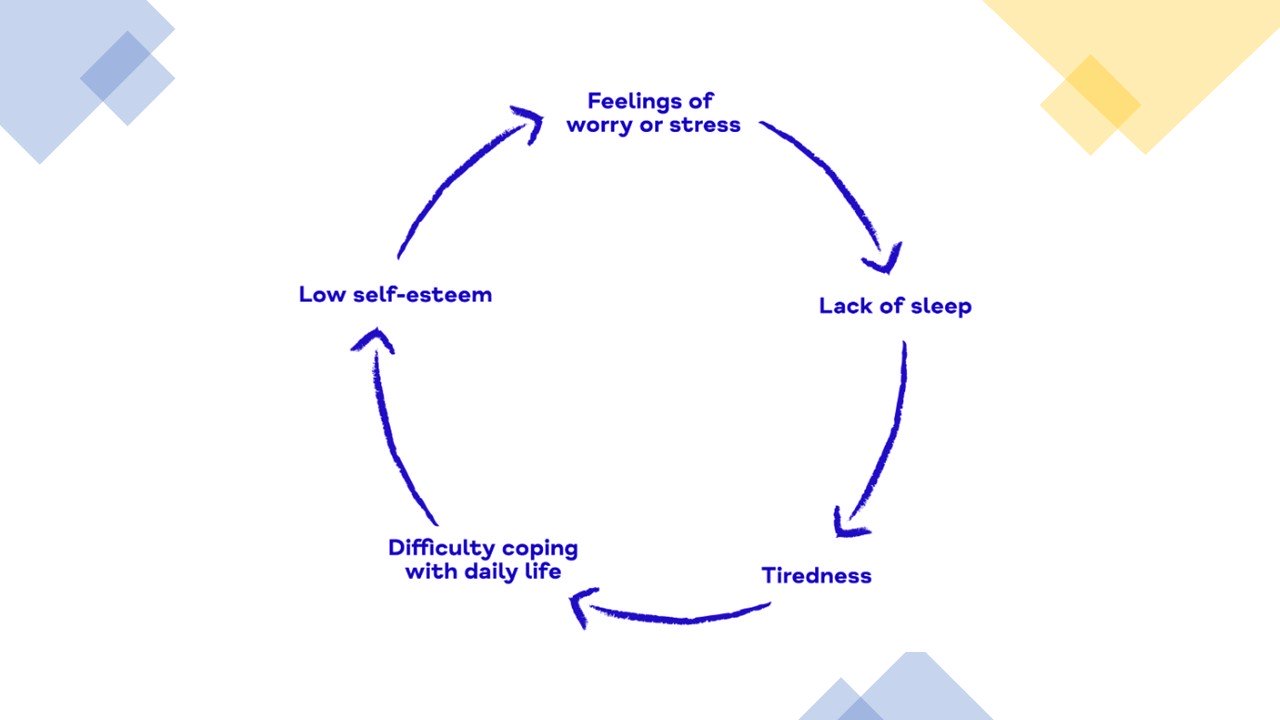
There’s a close relationship between sleep and mental health. Living with a mental health problem can affect how well you sleep, and poor sleep can have a negative impact on your mental health.
If you’re having problems sleeping, you might:
- feel lonely or isolated – for example, if you don’t have the energy to see people or they don’t seem to understand
- struggle to concentrate, or make plans and decisions
- feel irritable or not have energy to do things
- have problems with day to day life – for example, at work or with family and friends
- be more affected by other health problems, including mental health problems.
4 Tips to improve your sleep
- Try to establish a routine
- It could help to establish a regular sleeping routine or habits. You might need to try different things before you find what works for you.
- You could try going to bed and waking up at around the same time every day. Or it might help to go to bed only once you feel ready to sleep, but still get up around the same time.
- Relax before you try to sleep
- You may find a relaxation routine can help you prepare for sleep. These are some ideas you could try. Do something calming, For example, this could be listening to relaxing music or having a bath. A nicely made bed helps. If I’m having an awful day, and the only thing I’ve managed to find the energy to do is make my bed, then that’s OK.
- Breathing exercises: See the NHS UK and Mental Health Foundation websites for ones you can try. Another thing that has worked for me is to lay down on my back and rest both my hands on my stomach/chest. Concentrating on my breathing and feeling my natural up and down movement makes me stop overthinking.
- Muscle relaxation: Consciously tense and relax your muscles, one after the other, starting with your toes and working up your body until you reach the top of your head.
- Visualisation: Picture a scene or landscape that has pleasant memories for you, or that you imagine would be a calming or peaceful place to be.
- Meditation: Some people find it helps to try meditation techniques, like mindfulness. You could learn these at a class or from self-help guides.
- Use a sleep diary
- You may find it difficult to work out what’s affecting your sleep. A sleep diary involves recording information about your sleep habits to help you understand your sleep problem and what’s affecting it. If you want to, you can show your sleep diary to healthcare professionals to help explain what problems you’re having. For example, you could take it with you to a doctor’s appointment.
- A sleep diary could include information about:
- what time you go to bed and what time you get up
- total number of hours of sleep, or a rough idea if you’re not sure
- overall quality of sleep, ranked 1–5
- how many times you wake up in the night, how long you’re awake and what you do while you’re awake
- whether you have nightmares, night terrors or sleep paralysis, or have sleepwalked during the night
- whether you sleep during the day and for how long
- any medication you’re taking, including the dose and what time you take it
- the amount of caffeine, alcohol or nicotine you have
- the amount of physical activity you do
- what you eat and drink
- your general feelings and moods, including any anxious or repetitive thoughts.
- You should keep your sleep diary for at least two weeks.
- You can find a sleep diary template on the NHS Live Well website.
- Think about screens and device settings
- Using screens in the evening, including on tablets and mobile phones, can negatively affect your sleep. It can help to think about when and how you use screens. For example, you could try:
- avoiding screens an hour or two before bed
- cutting down on screen time before you try to sleep
- avoiding stimulating activities, such as playing games
- using a blue light filter, night mode or dark mode – you might be able to find these options in your device settings and in individual app settings
- adjusting other settings – for example, changing the brightness, or using silent, flight or airplane, or do not disturb mode.
- Using screens in the evening, including on tablets and mobile phones, can negatively affect your sleep. It can help to think about when and how you use screens. For example, you could try: